
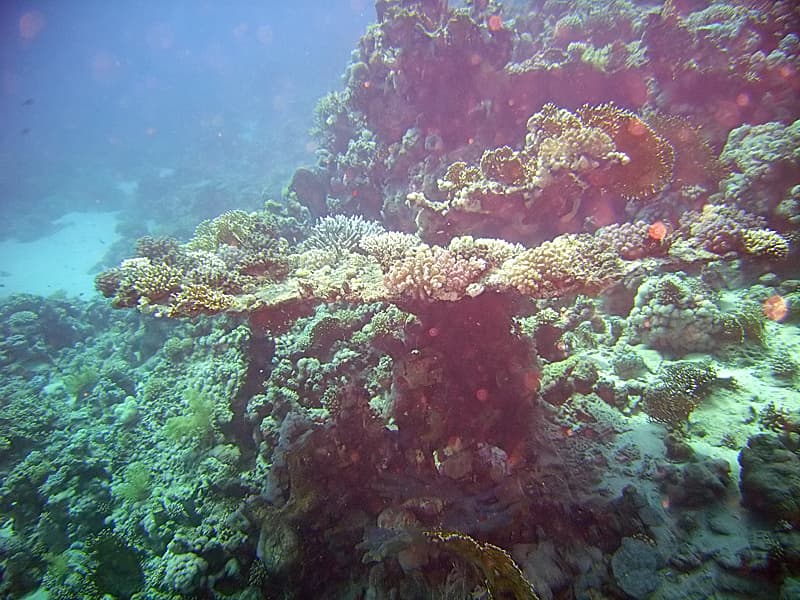
Jackfish Alley
Sharm El Sheikh & Ras Mohammed, Egypt
Ras Mohammed drift with sunlit swim-throughs at 5 and 15 m, then an alley of jackfish and whitetip reef sharks.
- Advanced
- Cavern
- Whitetip reef sharks
Dark: peak season. Light: regularly seen.
Sources confirm them, but don't say in which months.
Sharks belong to the chondrichthyan fishes, the group that also includes rays and chimaeras. The grey reef shark is the largest of the three common reef species, reaching a maximum length of about 2.65 metres, followed by the whitetip reef shark at about 2.13 metres and the blacktip reef shark at about 1.6 metres.1,3,4,5
Grey reef sharks have a recognisable threat display: they arch their back, lower their pectoral fins and wag their head and tail. Whitetip reef sharks are nocturnal and most active at night.1,3
Grey reef sharks live around tropical reefs from the surface to about 280 metres, and gather in groups during the day in reef passes and shallow lagoons. Whitetip reef sharks are almost always found on or near coral reefs and lagoons, and by day they rest on ledges or in caves, sometimes piled on top of one another.1,3
Blacktip reef sharks keep to the shallow waters of coral reefs and are rarely seen offshore or in deeper water. Their young use near-shore habitats such as lagoons and mangroves as nurseries.4
On the IUCN Red List, the grey reef shark is listed as Endangered, while the whitetip and blacktip reef sharks are listed as Vulnerable with decreasing populations.1,2,3,4
A global reassessment published in 2021 found that about one-third of the world's sharks, rays and chimaeras are threatened with extinction, with overfishing the threat common to all of them. The risk is highest in tropical and subtropical coastal waters, where more than three-quarters of species are threatened.5
A PADI guide to responsible shark and ray tourism asks divers to watch sharks from a distance, never touch or handle them, avoid flash photography, not feed them and not corner them or block their path. Shark Angels adds that chasing a shark only drives it away.6,7
Sources checked on 28 October 2026. Written from these pages and checked by an independent second reader.
Sharm El Sheikh & Ras Mohammed, Egypt
Ras Mohammed drift with sunlit swim-throughs at 5 and 15 m, then an alley of jackfish and whitetip reef sharks.
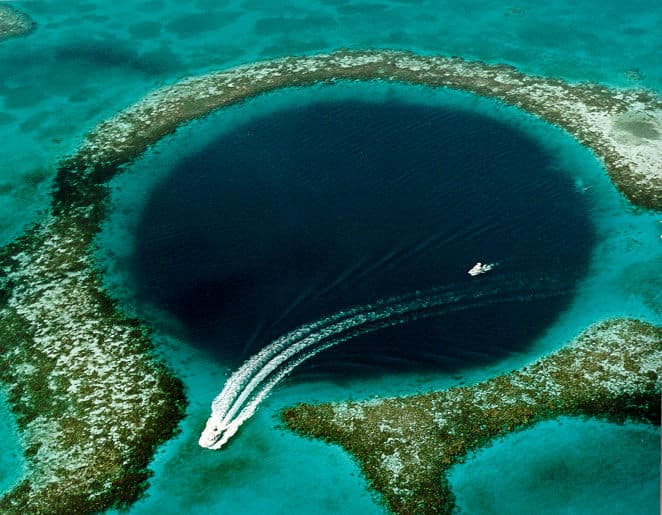
Belize
A deep dive to about 30-40 m among stalactites under the overhangs, watching for nurse, Caribbean reef and blacktip sharks on the ascent.
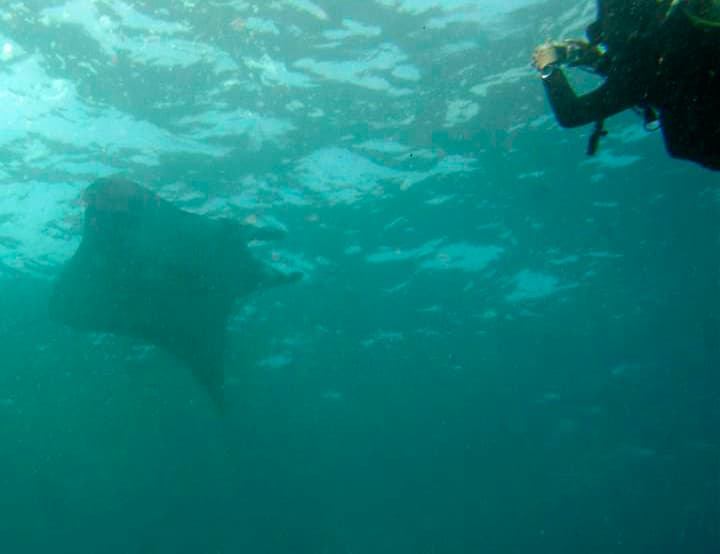
Bali & Nusa Penida, Indonesia
Mantas visit the cleaning stations here all year, sometimes in courtship 'manta trains' of up to 30.

Flower Garden Banks, United States
Siltstone pinnacles crusted with fire coral and sponges, home to the golden smooth trunkfish, found in only two places in the world.
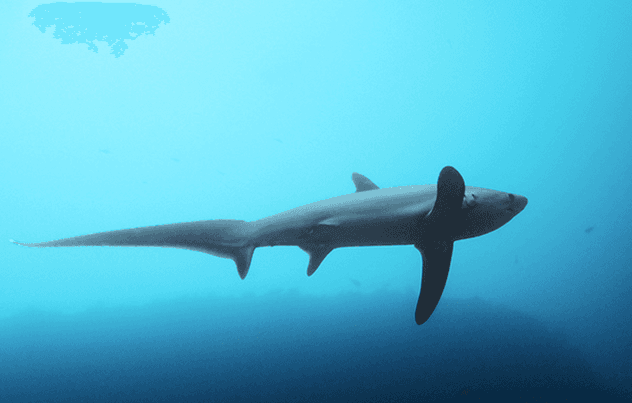
Malapascua, Philippines
A plateau where thresher sharks rise at dawn to visit cleaning stations.

SS Yongala (Townsville), Australia
Sunk by a cyclone in March 1911, the wreck lies on a 30 m seabed with its upper parts at 16 m; penetration diving is prohibited by law.

Komodo, Indonesia
Tiny Central Komodo rock pinnacle with clouds of anthias, bigeye trevally and sweetlips, whitetips on the deeper slopes and common hawksbill turtles.

Dahab, Egypt
Drop through the Bells chimney to a wall at about 25 m, then follow the wall to cross the 7 m saddle into the Blue Hole.

Dahab, Egypt
Walk-in shore dive where holes and cracks hide morays, nudibranchs and scorpionfish, with a school of yellowtail barracuda at 7 m.
Sipadan & Semporna, Malaysia
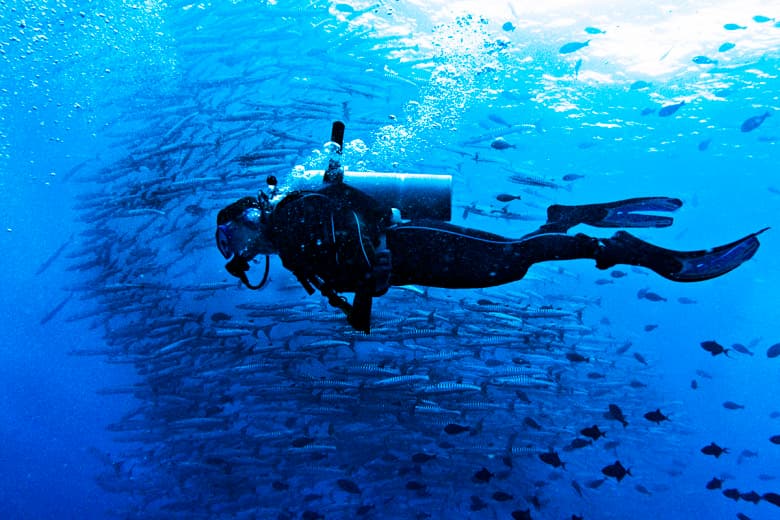
On Sipadan's north coast, divers can end up in the middle of a swirling vortex of chevron or blacktail barracuda.

Palau
Hook in above the wall and watch resident grey and whitetip reef sharks, tuna and barracuda work the current.

Guam
A vertical shaft from 18 m with a window onto the wall at about 40 m, and visibility that can reach 30 m or more.


