

Blue Hole
Guam
A vertical shaft from 18 m with a window onto the wall at about 40 m, and visibility that can reach 30 m or more.
- Experienced
- Blue hole
- Whale sharks
Dark: peak season. Light: regularly seen.
Sources confirm them, but don't say in which months.
The humpback whale reaches up to about 60 feet and 40 tons, takes its name from the hump on its back, and has long pectoral fins that inspired its scientific name. Humpbacks are known for complex songs of moans, howls and cries that can continue for hours.1,5
The common minke whale is the smallest baleen whale in North American waters, at up to about 35 feet; Northern Hemisphere minkes have a white band across their dark flippers. The sperm whale is the largest toothed whale, at 40 feet (females) to 52 feet (males), and hunts on dives that routinely reach 2,000 feet and last up to 45 minutes.2,3
Humpbacks live in all the world's major oceans and make one of the longest migrations of any mammal, feeding in cold, productive waters and moving to tropical breeding grounds in winter. Some populations swim 5,000 miles between the two. When calving, they prefer shallow, warm water near offshore reefs or coasts.1
Minke whales prefer temperate to boreal waters but also occur in the tropics and subtropics, both near the coast and offshore. Sperm whales are found in all deep oceans, from the equator to the edge of the polar pack ice. Humpbacks are in Tonga to mate and calve from July to October, which the IWC handbook gives as the peak period for swim-with tours there.2,3,4
On the IUCN Red List the humpback whale and the common minke whale are both listed as Least Concern globally. The sperm whale is listed as Vulnerable, a status the IUCN SSC Cetacean Specialist Group confirmed in an updated assessment published in December 2019.6,7,8
National protections differ: under the US Endangered Species Act, several humpback populations are listed as endangered (the Mexico population as threatened), and the sperm whale is listed as endangered.1,3
Many places limit in-water approaches. In Hawaii and Alaska it is illegal to approach a humpback within 100 yards, and NOAA advises watching all large whales from at least 100 yards. Tonga's government-ratified guidelines allow only licensed providers to put swimmers in the water: at most four clients and one guide, one vessel per pod, and no swimmer closer than 5 metres.1,4
The dwarf minke whale code of practice for the Great Barrier Reef World Heritage Area, developed from Minke Whale Project research with the dive industry, says swimmers must move slowly if a whale approaches them, and divers must never swim directly at a whale.9
Sources checked on 28 October 2026. Written from these pages and checked by an independent second reader.
Guam
A vertical shaft from 18 m with a window onto the wall at about 40 m, and visibility that can reach 30 m or more.
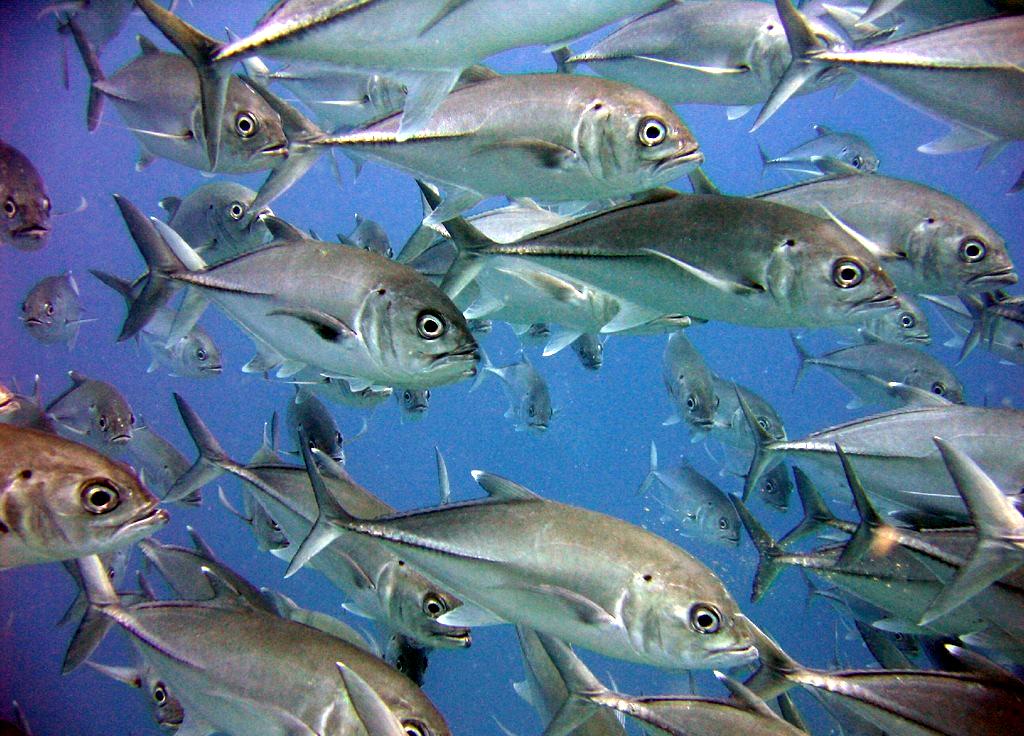
Great Barrier Reef (Cairns & Port Douglas), Australia
Isolated pinnacle rising to 5 m below the surface, rich in nudibranchs and pipefish, with large numbers of trevally and cruising barracuda.
Drift
down to 30 m
Zanzibar, Tanzania
A 6 km ridged seamount well out in the Pemba Channel, drifted at 18-25 m among schools of tuna, kingfish and barracuda.
Wall
down to 40 m
Palau
A vertical wall running to Peleliu Corner, where currents converge and grey reef and whitetip sharks are common sightings.
Pinnacle
down to 30 m
Koh Tao, Thailand
Open-sea pinnacle where whale sharks can sometimes be spotted from February to October, with leopard sharks on the sand.
Pinnacle
Los Cabos, Mexico
Two black-coral-covered seamounts about 11 km off San José del Cabo, where marlin, silky sharks, tuna and schooling hammerheads hunt.
Wall
Milne Bay, Papua New Guinea
Reef sloping from 5 m to 18 m then a vertical wall past 60 m, with elephant ear sponges and regular mobulas, mantas, hammerheads and whale sharks.
Pinnacle
down to 24 m
Great Barrier Reef (Cairns & Port Douglas), Australia
Bommie rising from 24 m to within 3 m of the surface, with schooling bluefin trevally, turtles under overhangs and minke whales in season.
Wreck
Los Cabos, Mexico
At the tip of Baja where the Pacific meets the Sea of Cortez: a resident sea lion colony, the Arch, an underwater cavern and a scattered wreck at 12–15 m.
Drift
down to 18 m
South West Rocks (Fish Rock), Australia
A boat-only drift along boulders at 6–18 m north of Smoky Cape, with resident turtles, wobbegongs, cuttlefish and spotted eagle rays.
Reef
down to 22 m
Bazaruto Archipelago, Mozambique
Coral barrier reef between Bazaruto and Benguerra islands sloping from 5 to 22 m, with big schools of reef fish, turtles, rays and reef sharks, and occasional dolphins and dugong.
Reef
down to 27 m
Kauai, United States
A ledge off Kauai's south shore near Brennecke's Beach, a popular boat dive among advanced divers at 18–27 m.

