
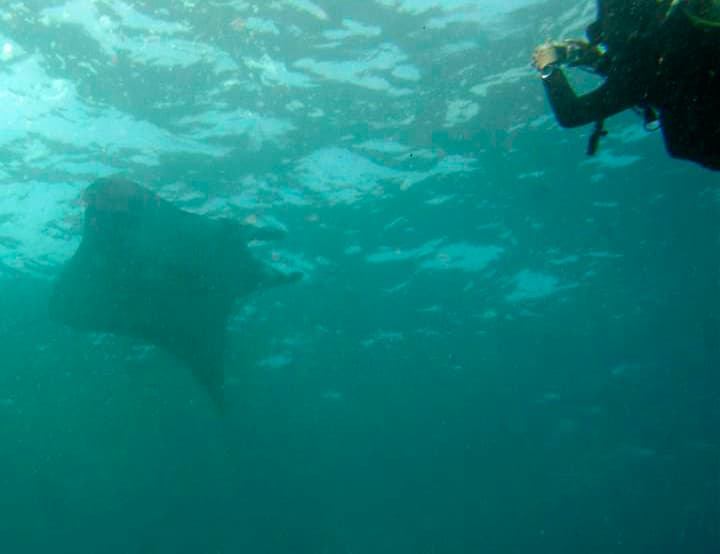
Manta Point
Bali & Nusa Penida, Indonesia
Mantas visit the cleaning stations here all year, sometimes in courtship 'manta trains' of up to 30.
- Advanced
- Rock formations
- Manta rays
Dark: peak season. Light: regularly seen.
Sources confirm them, but don't say in which months.
The giant manta is the world's largest ray: NOAA Fisheries gives a wingspan of up to 26 feet (about 8 metres). The reef manta is smaller: Save Our Seas gives a maximum width of 5 metres but notes that reef mantas rarely exceed 4 metres.1,2
Mantas are filter feeders that eat large quantities of zooplankton such as copepods, mysids and shrimp. The two species can be told apart by their markings: reef mantas usually have dark spots on the belly between the gill slits, while giant mantas have none there and show distinct white L-shaped markings on the shoulders.2,4
Reef mantas generally stay resident in productive coastal areas, especially around reefs and atolls, and are often seen at cleaning stations on reefs. In places such as Seychelles and the Maldives, the tidal cycle also plays a significant role in bringing plankton together.1
Giant mantas are commonly found offshore and in oceanic waters, and are migratory, seasonal visitors along productive coastlines. Although they tend to be solitary, they gather at cleaning sites and to feed and mate.2
The giant manta was uplisted to Endangered on the IUCN Red List in December 2020, the first manta species to be listed as Endangered; the main driver is fishing, much of it for gill plates. The reef manta is listed as Vulnerable, with a decreasing population. In the United States, the giant manta is also listed as threatened under the Endangered Species Act.1,2,3
The Manta Trust publishes a 10-step code of conduct for swimmers and divers. Its main points are below; local rules at a given site come on top of it.5
Sources checked on 28 October 2026. Written from these pages and checked by an independent second reader.
Bali & Nusa Penida, Indonesia
Mantas visit the cleaning stations here all year, sometimes in courtship 'manta trains' of up to 30.

Similan Islands & Khao Lak, Thailand
Schools of chevron barracuda overhead while tigertail seahorses, harlequin shrimps and ghost pipefish hide in fields of soft coral.

Flower Garden Banks, United States
Siltstone pinnacles crusted with fire coral and sponges, home to the golden smooth trunkfish, found in only two places in the world.

Flower Garden Banks, United States
Brain and star corals give this offshore salt-dome bank over 52% coral cover, rising 15-20 feet above nearby sand patches in some areas.
Marsa Alam & the Brothers, Egypt
Open-ocean reef 25 km north of Marsa Alam where oceanic whitetips frequent the southern plateau, best October to December.

Tofo, Mozambique
A wall drift where giant manta rays visit three cleaning stations and huge potato groupers come to check divers out.

Palau
Hook in above the wall and watch resident grey and whitetip reef sharks, tuna and barracuda work the current.

Dahab, Egypt
Drop through the Bells chimney to a wall at about 25 m, then follow the wall to cross the 7 m saddle into the Blue Hole.
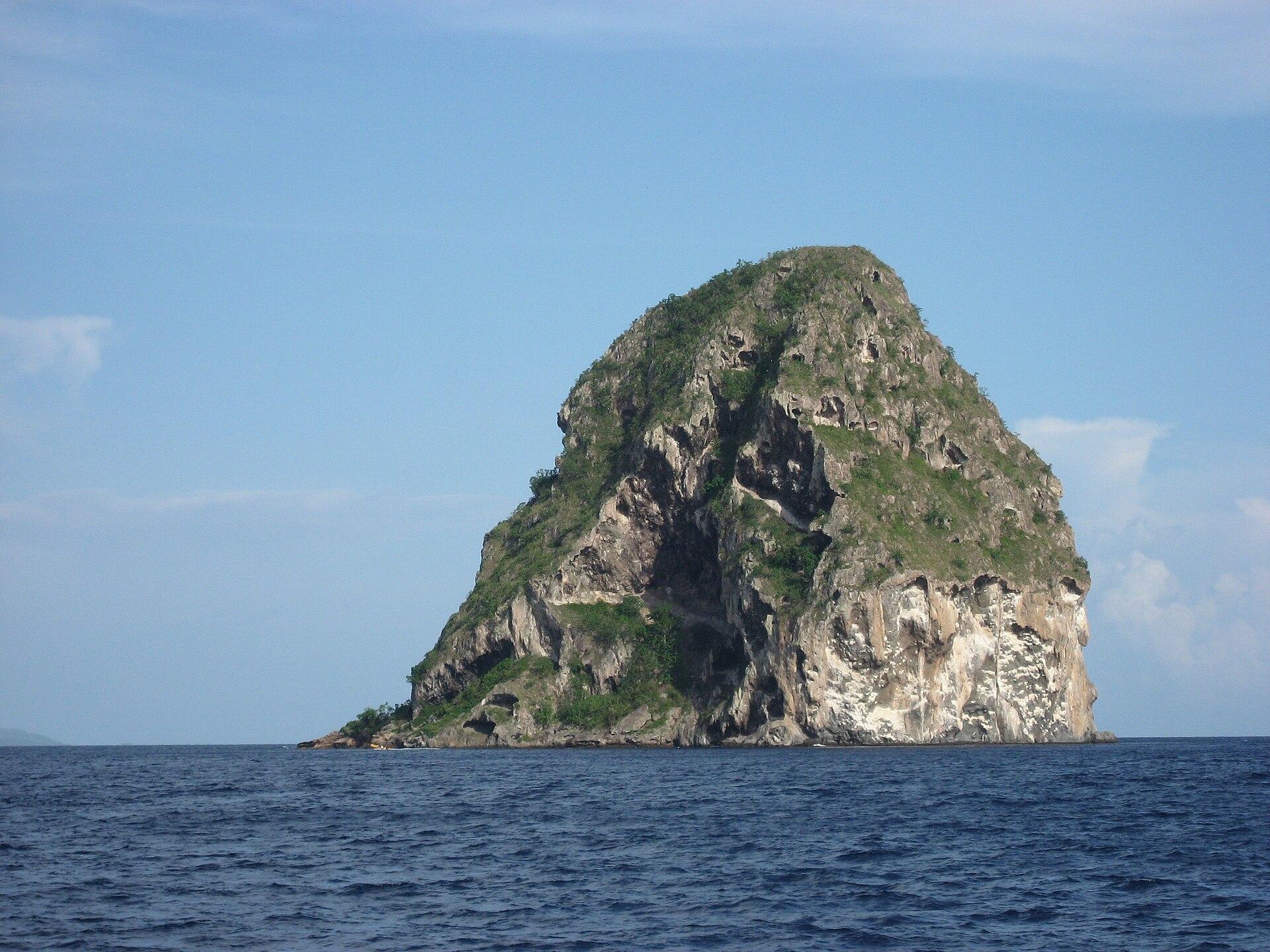
Martinique
A narrow fault cutting down to about 20 m in the rock, patrolled by jacks, barracudas and mackerel, with Brazilian spiny lobsters.

Komodo, Indonesia
Shallow manta cleaning-station drift where reef mantas show up year-round, peaking December–April with 4–12 on a good dive.

Bali & Nusa Penida, Indonesia
One of the few places to see Mola Mola being cleaned, from July to November, above hard and soft coral gardens.

Azores, Portugal


