Drift
down to 40 m
Garuae Pass (North Pass)
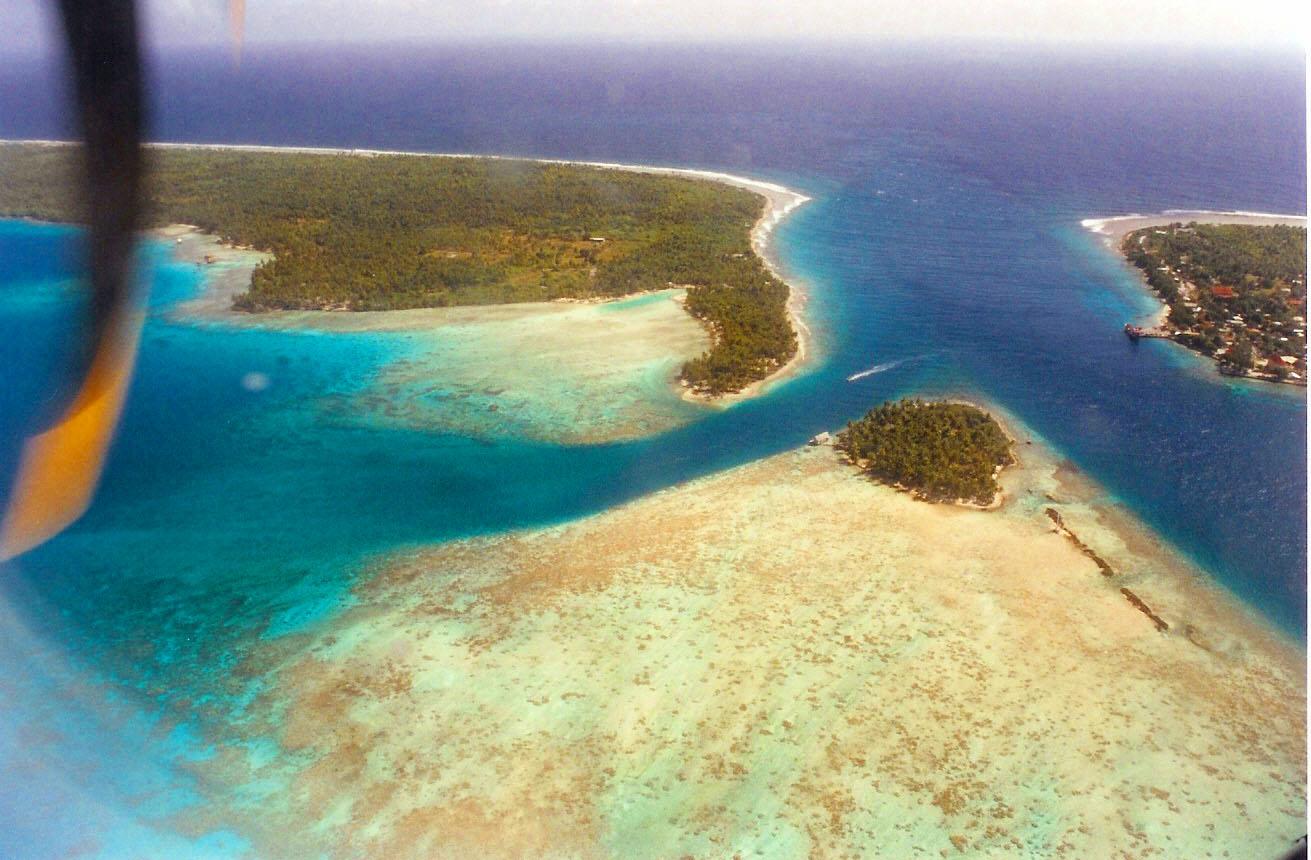
French Polynesia's widest pass, 1,600 m across, dived on the incoming tide for sharks, tuna and barracuda; some dives end at Ali Baba.
- Advanced
- Grey reef sharks

Diving in French Polynesia
9 documented dive sites. Known for manta rays, hammerhead sharks and blacktip reef sharks.
Photo: Frédéric Jacquot (deelight@poulet.org), CC BY-SA 2.5, via Wikimedia Commons
Pick a month: the diving season, from published sources, and the typical weather.
Pick a month
Exposure suit: swimsuit, rash guard or dive skin · if you feel the cold: 2 mm shorty or 1 mm full suit. How we choose
Typical weather, not a forecast: averages for 2021–2025 (air, rain, wind) and 2023–2025 (sea), data from Open-Meteo (ERA5 / Copernicus, Météo-France). Covers an area of roughly 10 to 25 km around the destination.
Year-round; June–July grouper spawning in the South Pass draws hundreds of sharks. Dry season May–Oct 25–27 °C.
Underwater visibility
Visibility at Fakarava averages 10-30 m (32-98 ft).
Big natural events
A few snorkelling spots
Rangiroa's marine life can be watched by divers and snorkellers, but its best-known sites, such as Tiputa Pass and the Blue Lagoon, are described as dive sites.
From the easiest to the most demanding. Levels with a dashed outline are estimates we are still verifying.
Drift
down to 40 m
French Polynesia's widest pass, 1,600 m across, dived on the incoming tide for sharks, tuna and barracuda; some dives end at Ali Baba.

Drift
down to 35 m
Drift
down to 25 m
Wall
down to 40 m
Drift
down to 26 m
Drift
down to 50 m
When the big encounters happen, month by month.
| Species | Jan | Feb | Mar | Apr | May | Jun | Jul | Aug | Sep | Oct | Nov | Dec |
|---|---|---|---|---|---|---|---|---|---|---|---|---|
| Hammerhead sharksSource: zubludiving.com | ||||||||||||
| GroupersSource: zubludiving.com | ||||||||||||
| Manta raysSource: zubludiving.com | ||||||||||||
| Grey reef sharksSource: zubludiving.com | ||||||||||||
| Humpback whalesSource: diveadventures.com.au | ||||||||||||
| DolphinsSource: zubludiving.com | ||||||||||||
| Eagle raysSource: zubludiving.com |
Hammerhead sharks: Jan–Mar. Groupers: Jun–Jul. Manta rays: All year. Grey reef sharks: All year. Humpback whales: Aug–Oct. Dolphins: All year. Eagle rays: Jan–Mar
Also reported here, season not documented yet:
Here a dive costs between €67 and €101, a try dive between €117 and €148 and an Open Water course between €377 and €670, depending on the dive centres we checked.
The cheapest and the most expensive of the dive centres we checked, from the prices on their own websites in October 2026. Prices change: confirm with the centre before booking.
Some clubs also require a club licence or insurance to dive.
Converted to euros at the ECB reference rate of 30 October 2026; for currencies the ECB does not publish, the official rate of the country's central bank.
The routes liveaboards usually run here, from their own itinerary pages. Programmes change: check with the operator.
Tuamotu cruise from Fakarava (Fakarava passes, Toau, Kauehi)
7–8 nights · from Fakarava
Garuae (north pass), Tumakohua (south pass), Tetamanu, Toau lagoon, Kauehi pass
Level asked: CMAS level 2 or PADI Advanced Open Water advised
Centres that dive here, with what their own websites say: agencies, trips, courses.
O2 Fakarava
Rotoava, Fakarava (north)
Agencies: SSI, ANMP
Rangiroa Diving Center
Ohotu Pier, Avatoru, Rangiroa
Agencies: FFESSM, ANMP, SDI/TDI
Te Ava Nui (formerly Dive Spirit Fakarava)
Rotoava, Fakarava
Agencies: SSI, PADI
The Six Passengers
Avatoru, Rangiroa
Agencies: PADI, PADI 5 Star Dive Resort
TOPDIVE
Rangiroa (Reporepo beach, Hôtel Kia Ora) and Rotoava, Fakarava
Y'aka Plongée
Avatoru, Rangiroa
Agencies: SSI, FFESSM
Listed alphabetically. No centre pays to appear here or to change the order. Criteria: its own website, dives in this area and proof of activity since 2025 (otherwise a notice says so); every detail comes from the centre's own site. Run a centre and spotted an error? Write to contact@reef-explorers.com.
The recompression chambers that treat divers from this area, and who to call after an accident. Check locally: a chamber can close.
We have not found a published source on the nearest recompression chamber. Ask your dive centre for its emergency plan before you dive.
About this page
Last updated .
Seasons and marine life come from the sources below. Site levels and depths marked as estimated come from our original catalogue and are being checked one by one. Conditions change: always confirm with a local dive centre.
One email a month, around the 25th: the destinations in season the following month, with their sources, an article to read and an instructor's tip. Free, no ads.

Your next dive is somewhere out there.
Find my next dive trip