Reef Explorers

Cave, cavern and cenote dives

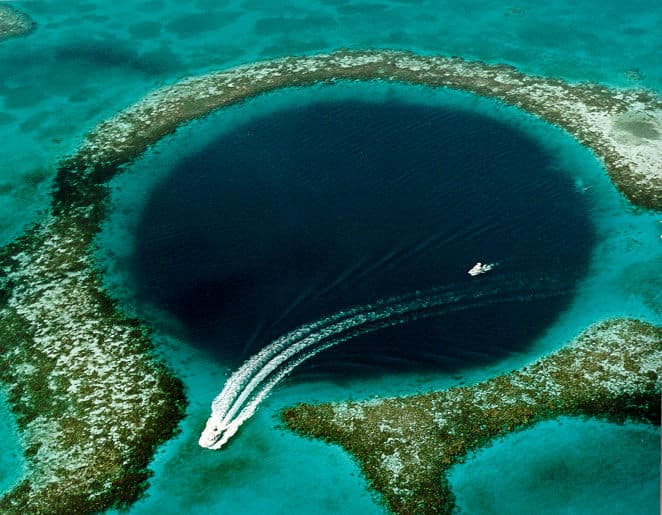
Caverns, cenotes and blue holes, from daylight zones to full cave systems. 188 dive sites, each with its depth and the level we recommend.

Cave, cavern and cenote dives: the guide

What it is

  • Cave diving is diving in water-filled caves, beyond the reach of natural daylight.1
  • Cavern diving is a more limited activity in the naturally lit part of a cave, near the entrance.1,2
  • A cenote is a natural sinkhole where collapsed limestone exposes groundwater; the term comes from Mexico's Yucatán Peninsula.3
  • Cenotes on the Caribbean coast of the Yucatán often lead into large underwater cave systems, and the ancient Maya used cenotes for water and religious rites.3

Level and training

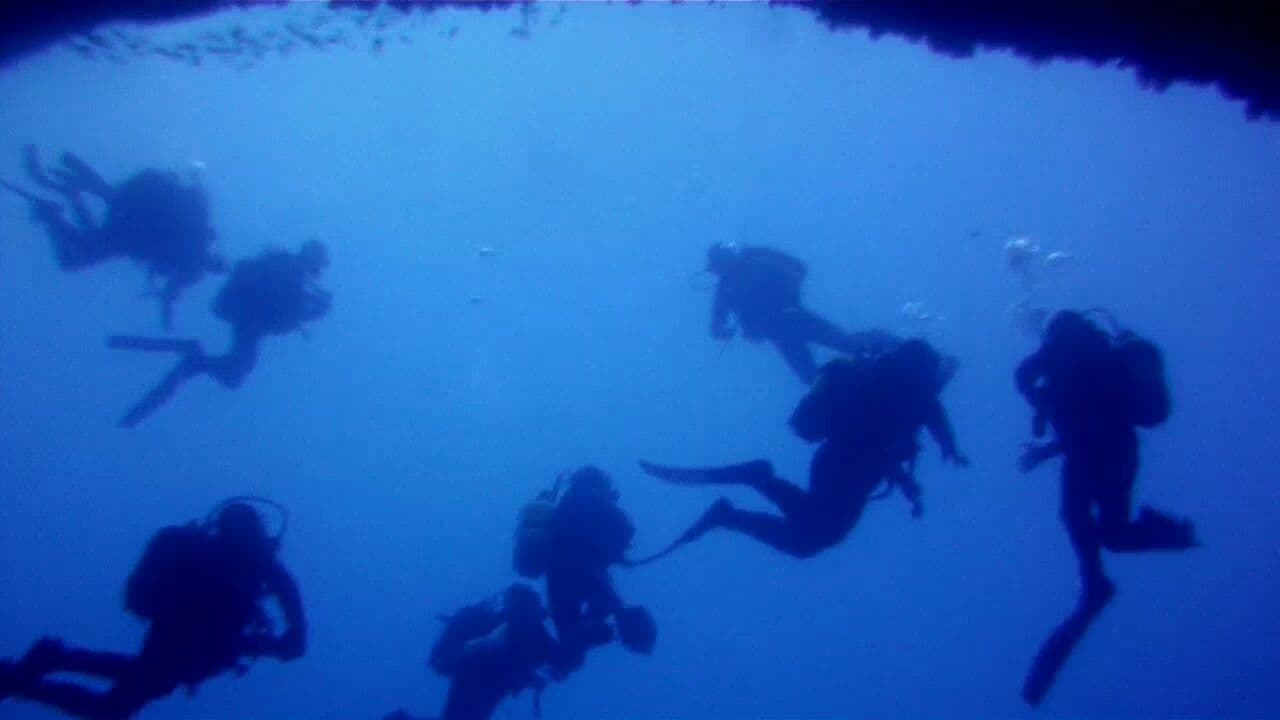
  • The cavern zone is the part of a cave where daylight from the entrance stays visible, and PADI cavern training keeps divers within this light zone.2,4,5
  • SSI cavern training stays in the daylight zone, uses only simple single-line navigation and goes no deeper than 40 m or the diver's certified depth, whichever is shallower.2,6
  • The PADI Cavern Diver course requires Advanced Open Water certification and a minimum age of 18, and includes four cavern dives.5,7
  • Cave training then continues in stages, such as intro and apprentice cave, with full cave as the final level of basic training.1
  • Unlike cenote cavern diving, cenote cave diving requires special equipment and training.3

How it's done

  • Divers lay and keep a continuous guideline between the team and open water.1,2
  • Many cave divers plan gas with the rule of thirds: one third to go in, one third to come out and one third in reserve.7,8
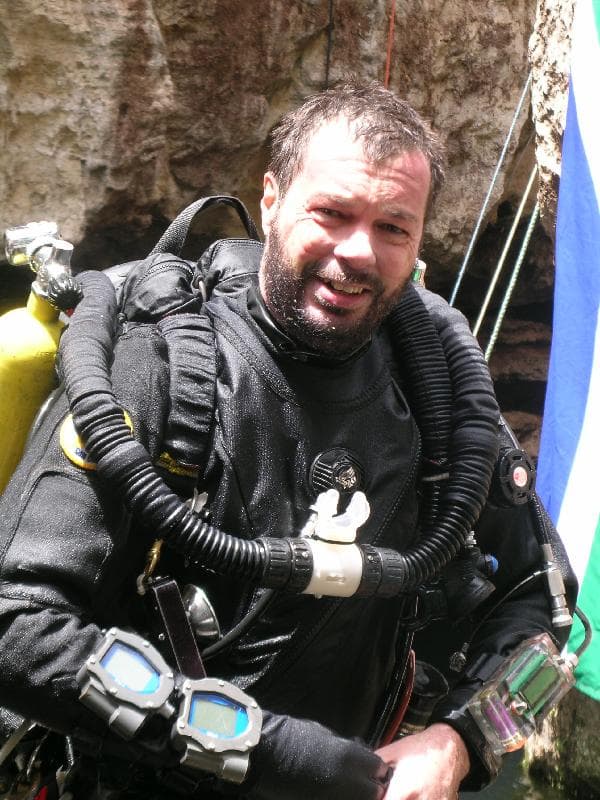
  • Each cave diver should carry at least three independent lights.1
  • Good buoyancy and modified fin kicks keep silt from being stirred up.2,7

Risks and safety

  • In a cave or cavern you cannot swim straight up to the surface in an emergency.1
  • Most cave-diving deaths happen when divers run out of gas before reaching the exit.1
  • Most divers who have died in caves had no specialised training or inadequate equipment, so do not enter an overhead environment without being qualified.1,8
  • One fin kick too close to the bottom can cut visibility to almost zero, and the guideline is then the way back out.1,2

Good to know

  • In cenotes, a halocline where fresh and salt water meet can blur your vision until you pass through it.3
  • On a cavern dive, stay within sight of the entrance: once daylight is no longer visible, you are in the cave.2,4,6
  • Do not go deeper than planned, and never go beyond the scope of your training.1
  1. 1. en.wikipedia.org
  2. 2. divessi.com
  3. 3. en.wikipedia.org
  4. 4. scuba.com
  5. 5. store.padi.com
  6. 6. training.divessi.com
  7. 7. scubadiving.com
  8. 8. dan.org

Highlights

All 188 dive sites, by destination

Levels with a dashed outline are estimates we are still checking against published sources.

Malta, Gozo & Comino, Malta

Mount Gambier sinkholes, Australia

Miyakojima, Japan

El Nido, Philippines

Perth, Rottnest & Busselton, Australia

Azores, Portugal

Dalmatia (Vis & Split), Croatia

Medes Islands (Costa Brava), Spain

Palau

Rhodes, Greece

Ustica, Italy

Vava'u, Tonga

Bahamas

Bay of Pigs (Cuba), Cuba

Bohol & Panglao, Philippines

Bonito, Brazil

Byron Bay (Julian Rocks), Australia

Crete, Greece

Crystal River & Rainbow River, United States

Dahab, Egypt

Florida Springs, United States

Ha'apai, Tonga

Jamaica

Koh Samui & Koh Phangan, Thailand

Lanai, United States

Oahu, United States

Paphos, Cyprus

Puerto Galera, Philippines

Roatán & Bay Islands, Honduras

Romblon, Philippines

Aliwal Shoal & Protea Banks, South Africa

Alor, Indonesia

Ambon, Indonesia

Belize

Bodrum, Turkey

Boesmansgat, South Africa

Corn Islands, Nicaragua

Coron, Philippines

Cozumel, Mexico

Donsol, Philippines

El Quseir, Egypt

Forster & Seal Rocks, Australia

Guam

Isla de la Juventud (Cuba), Cuba

Istria, Croatia

Kauai, United States

Kefalonia, Greece

Kona (Big Island), United States

Kosrae, Micronesia

Larnaca, Cyprus

Lifou (Loyalty Islands), New Caledonia

Los Cabos, Mexico

Mactan (Cebu), Philippines

Malapascua, Philippines

Moalboal, Philippines

Molokai, United States

Nha Trang, Vietnam

Nuku Hiva (Marquesas), French Polynesia

Phuket & Koh Lanta, Thailand

Poor Knights Islands, New Zealand

Port Vila (Efate), Vanuatu

Providencia, Colombia

Raiatea & Taha'a, French Polynesia

Rodrigues, Mauritius

Saipan & Rota, Northern Mariana Islands

Sal (Cabo Verde), Cape Verde

Siargao, Philippines

Sipadan & Semporna, Malaysia

St Vincent and the Grenadines, Saint Vincent and the Grenadines

Vis & Kornati, Croatia

Wakatobi, Indonesia

Filter these by level and region
Photo credits