
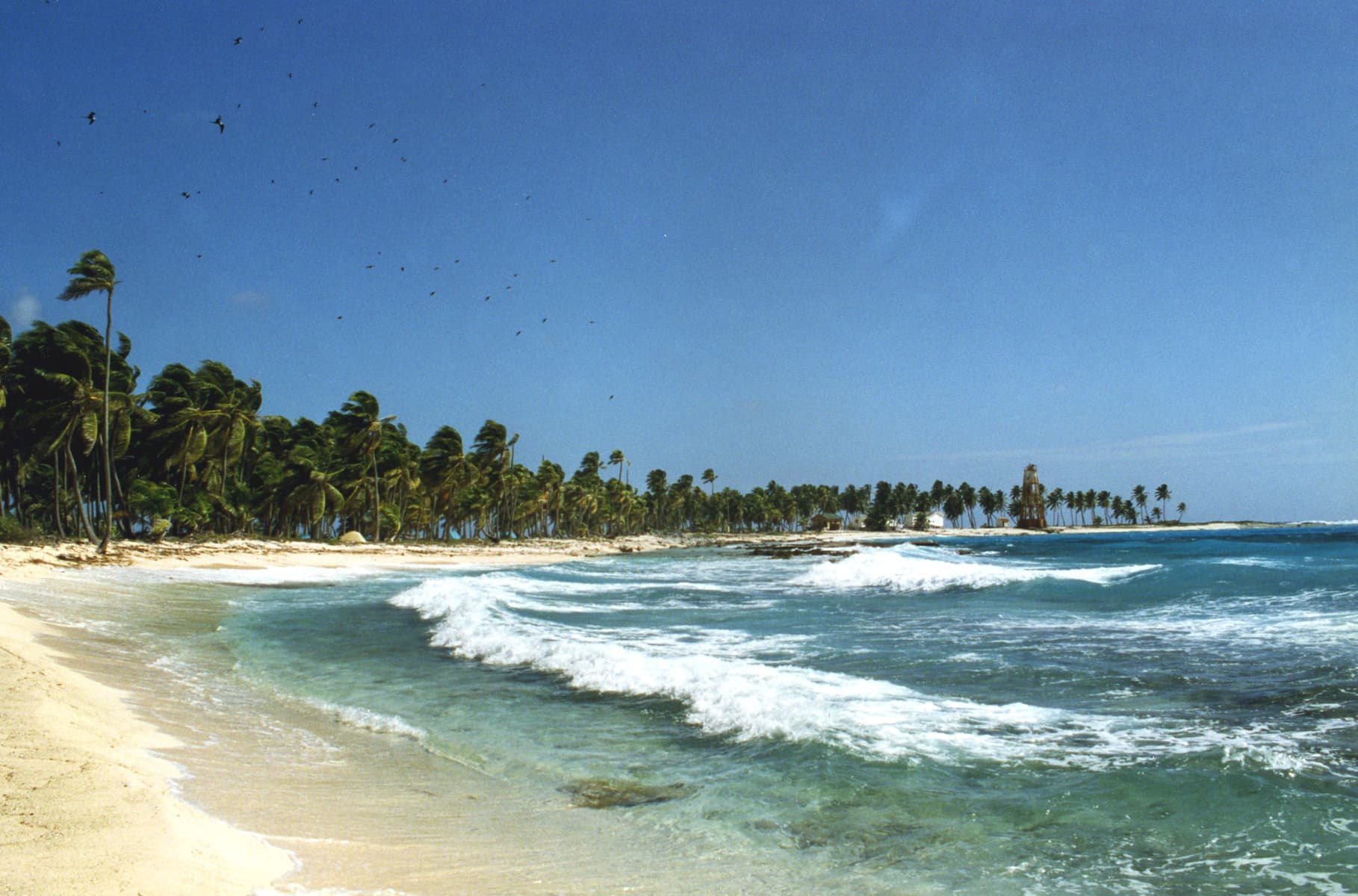
Half Moon Caye Wall
Garden eels on a 6 m sand shelf give way to a wall dropping past 30 m into the abyss, with reef sharks patrolling its edge in gentle currents.
- Advanced
- Wall
- Manta rays
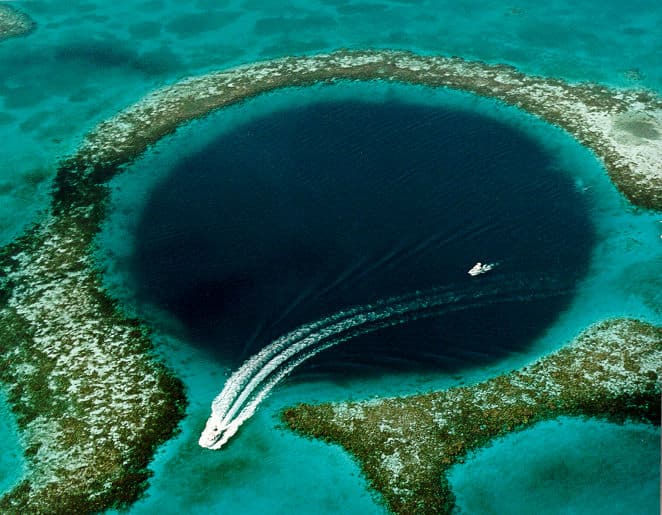
Dive site in Belize
A deep dive to about 30-40 m among stalactites under the overhangs, watching for nurse, Caribbean reef and blacktip sharks on the ascent.
Photo: U.S. Geological Survey (USGS), Public domain, via Wikimedia Commons
Jacques Cousteau brought his ship, the Calypso, to the Great Blue Hole in 1971 to chart its depths and declared it one of the top five scuba diving sites in the world. It is part of the Belize Barrier Reef Reserve System, a UNESCO World Heritage Site.
Source: en.wikipedia.org
A blue hole and cavern dive from a boat. Known for blacktip shark, bull sharks and caribbean reef sharks.
Recommended minimum: Experienced (Deep Specialty, N3).
Best months: Mar–Jun.
Source: liveaboard.comThe point shows the Belize area, not the exact dive site.
Garden eels on a 6 m sand shelf give way to a wall dropping past 30 m into the abyss, with reef sharks patrolling its edge in gentle currents.

A shallow channel about 9 m deep in a marine reserve, where large groupers, nurse sharks, stingrays and green moray eels can be seen.
Reef
down to 21 m
Coral gardens of brain corals, sea fans and sponges near Caye Caulker, where stingrays, nurse sharks and sea turtles are common sightings.
Reef
down to 18 m
Slow-paced 18 m local reef dive minutes from Caye Caulker, with time to practise buoyancy and explore reef details.
Wall
down to 37 m
Groups of up to 50 eagle rays and occasional hammerheads over dramatic drop-offs on an advanced, strong-current dive at Turneffe.
Pelagic
down to 24 m
Whale sharks at the snapper spawn around the full moons of April to June, 22 miles off Placencia, on dives typically to 60 ft (18 m).
About this page
Values marked “Estimated” come from our original catalogue and are being checked against published sources one by one. Sourced values link to where they come from. Conditions change with the season, the weather and the tide: confirm with a local dive centre before you dive.

