

Stetson Bank
Flower Garden Banks, United States
Siltstone pinnacles crusted with fire coral and sponges, home to the golden smooth trunkfish, found in only two places in the world.
- Advanced
- Wall
- Whale sharks
Dark: peak season. Light: regularly seen.
| Destination | Jan | Feb | Mar | Apr | May | Jun | Jul | Aug | Sep | Oct | Nov | Dec |
|---|---|---|---|---|---|---|---|---|---|---|---|---|
| CozumelPeak Nov–Mar | ||||||||||||
| Poor Knights IslandsPeak Jan–Apr | ||||||||||||
| AzoresPeak Jul–Oct | ||||||||||||
| Cancún & Isla MujeresPeak Nov–Feb | ||||||||||||
| Canary Islands (Lanzarote & Fuerteventura)May–Nov | ||||||||||||
| GalápagosNov–May | ||||||||||||
| MaldivesDec–May | ||||||||||||
| MauiSep–Feb | ||||||||||||
| Cayman IslandsDec–Apr | ||||||||||||
| La Paz & Sea of CortezJul–Nov | ||||||||||||
| Medes Islands (Costa Brava)Jun–Sep | ||||||||||||
| Nosy BeSep–Dec | ||||||||||||
| Raja AmpatSep–Dec | ||||||||||||
| Algarve (Portimão)Jun–Aug | ||||||||||||
| Fakarava & RangiroaJan–Mar | ||||||||||||
| Flower Garden BanksJan–Mar |
Sources confirm them, but don't say in which months.
Stingrays are camouflaged on the sea floor, where they move slowly while foraging. Their defence is a tail spine known as the barb; the southern stingray, up to 1.5 metres across, can bury itself in sand and can thrash its barb over its head like a scorpion.4,5
The spotted eagle ray can reach about 3 m across, has a whip-like tail two and a half to three times its disc width, and crushes clams and other shellfish with plate-like teeth.3
Munk's devil ray, a mobula, averages about 89–100 cm across. Guitarfish look partway between a shark and a skate; the Atlantic guitarfish grows to about 30 inches.2,6
The southern stingray is most common in sandy habitats near mangroves, coral reefs and estuaries. The Atlantic guitarfish lives partly buried in sandy and muddy bottoms in shallow coastal water, and has been reported to about 100 feet.2,5
Spotted eagle rays are commonly seen in bays and over coral reefs down to about 60 m, and in open water they often school near the surface. Munk's devil rays gather in groups of up to tens of thousands and often leap several metres out of the water.3,6
Stingrays sting people only when they feel threatened, often after being stepped on by accident. For people wading in shallow water from a beach, the National Capital Poison Center advises shuffling or dragging the feet along the bottom instead of stepping; this is wading advice, not diving advice.4
A global reassessment published in 2021, covering sharks, rays and chimaeras, found that about one-third of these species are threatened with extinction. Rays came out as the most threatened group, with 41% of the 611 ray species assessed listed as threatened, and overfishing was the threat common to every threatened species.1
Several ray families that divers may meet are among the most at risk. The study named sawfishes, giant guitarfishes, devil rays and pelagic eagle rays as the four most imperilled families, and guitarfishes and wedgefishes as among the most threatened rays.1
Among the species divers often meet, the southern stingray is listed as Near Threatened with a decreasing population; the source does not give the assessment year.5
PADI's best-practice advice for shark and ray encounters asks divers to watch from a distance, never touch or handle rays, avoid flash photography and not feed them. The best-practice guide Responsible Shark and Ray Tourism (WWF, Project AWARE and the Manta Trust) adds that where encounters can happen without bait or other attractants, it is best not to use one; at southern stingray feeding sites in the Cayman Islands, regular feeding has been linked to changes in feeding habitats and to parasites and predation.5,7,8
Sources checked on 28 October 2026. Written from these pages and checked by an independent second reader.
Flower Garden Banks, United States
Siltstone pinnacles crusted with fire coral and sponges, home to the golden smooth trunkfish, found in only two places in the world.

Malta, Gozo & Comino, Malta
An 80 m tunnel leads from Dwejra's enclosed lagoon to the open sea, deepening from 3 m to 26 m at the seaward end.
Bali & Nusa Penida, Indonesia
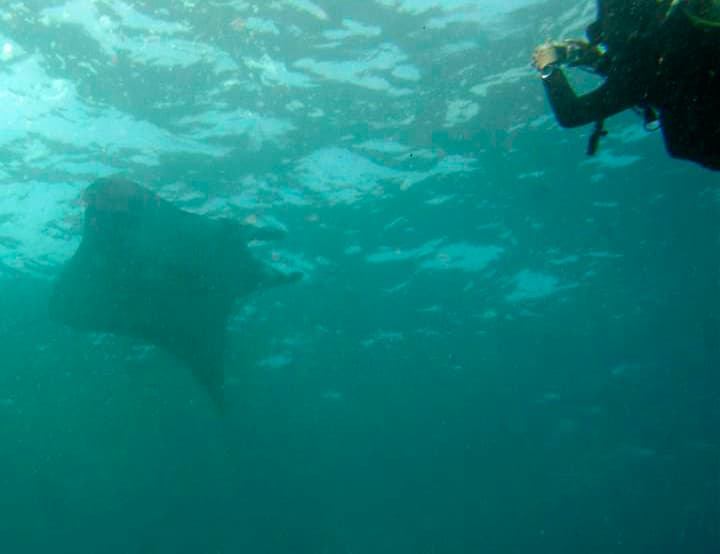
Mantas visit the cleaning stations here all year, sometimes in courtship 'manta trains' of up to 30.
Malapascua, Philippines
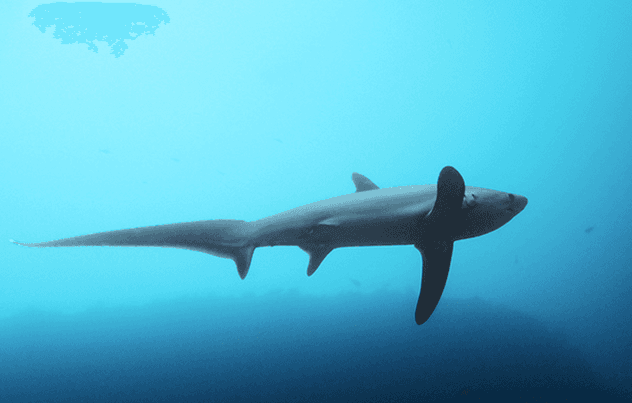
A plateau where thresher sharks rise at dawn to visit cleaning stations.

SS Yongala (Townsville), Australia
Sunk by a cyclone in March 1911, the wreck lies on a 30 m seabed with its upper parts at 16 m; penetration diving is prohibited by law.
Sharm El Sheikh & Ras Mohammed, Egypt
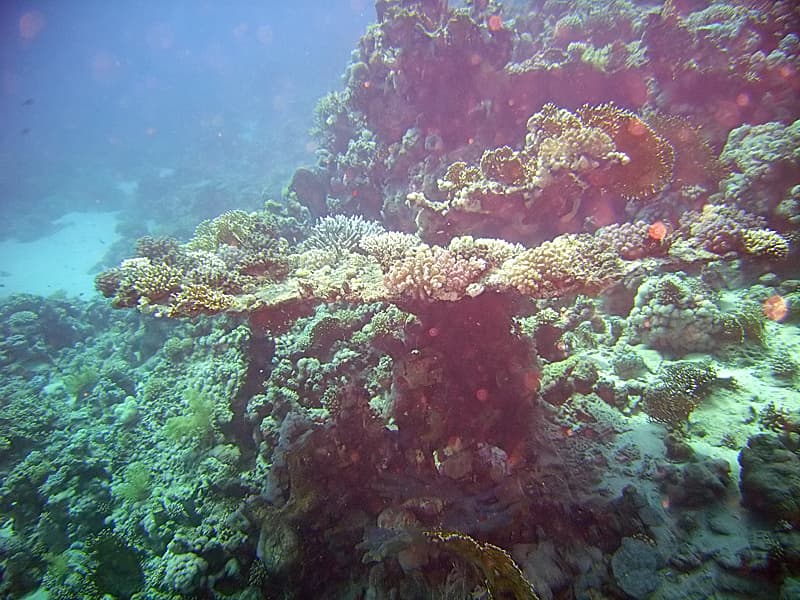
Ras Mohammed drift with sunlit swim-throughs at 5 and 15 m, then an alley of jackfish and whitetip reef sharks.

Dahab, Egypt
Large gorgonian at 35 m, a sand area with tube eels and a shallow area of small boulders.

Komodo, Indonesia
North Komodo site where grey, whitetip and blacktip reef sharks cruise the blue alongside big schools of giant trevally, dogtooth tuna and barracuda.

Komodo, Indonesia
Shallow manta cleaning-station drift where reef mantas show up year-round, peaking December–April with 4–12 on a good dive.

Palau
Hook in above the wall and watch resident grey and whitetip reef sharks, tuna and barracuda work the current.

Dahab, Egypt
Drop through the Bells chimney to a wall at about 25 m, then follow the wall to cross the 7 m saddle into the Blue Hole.

Dahab, Egypt
Walk-in shore dive where holes and cracks hide morays, nudibranchs and scorpionfish, with a school of yellowtail barracuda at 7 m.


