F.T. Barney
A schooner resting upright in 160 ft (about 49 m) of water, a technical dive.
- Technical
- Wreck
Dive site in Great Lakes Shipwrecks (Thunder Bay), United States
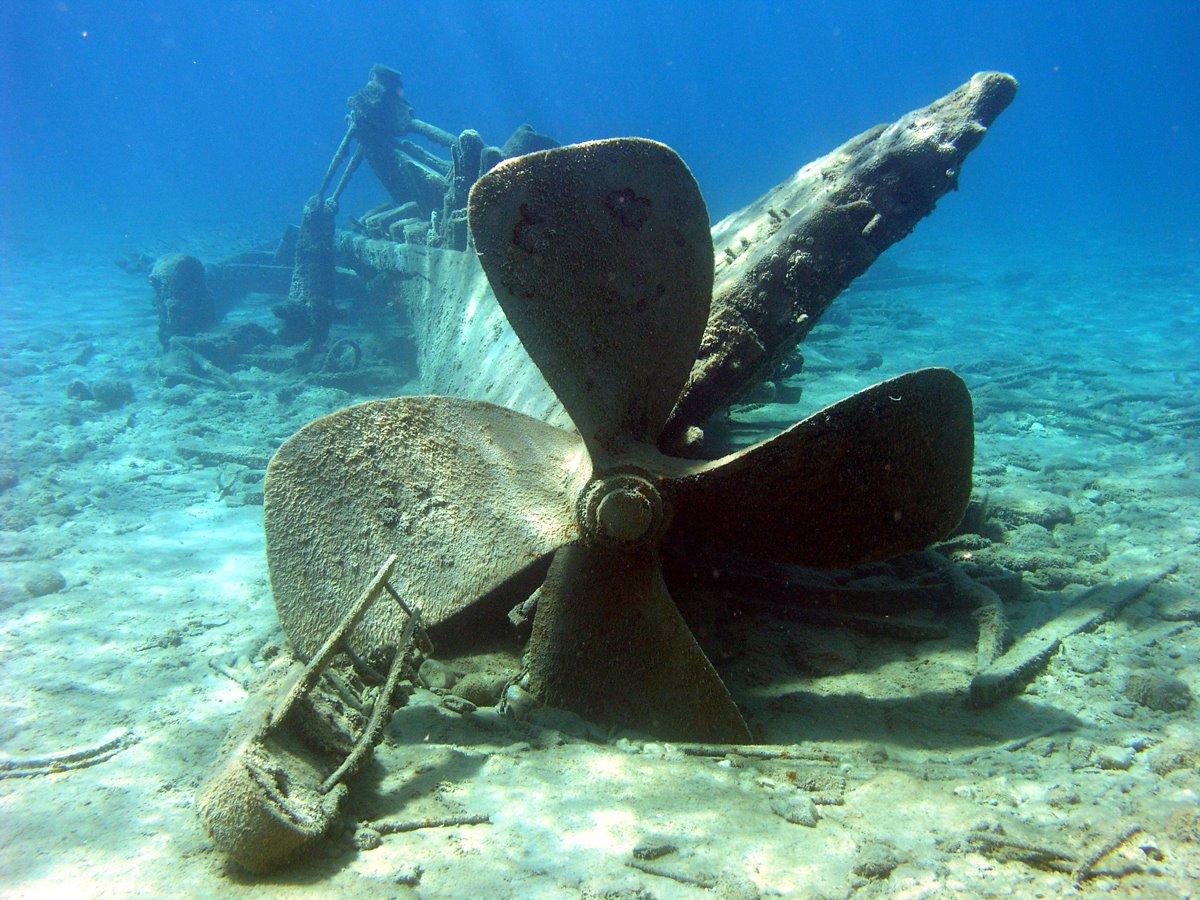
A wooden steam barge in about 20 ft (6 m) of clear water, regularly visited by divers, snorkelers, swimmers and paddlers.
Photo: NOAA's National Ocean Service, CC BY 2.0, via Wikimedia Commons
The wooden steam barge Monohansett caught fire on November 23, 1907, while sheltering behind Thunder Bay Island from a gale. Lifesavers from the Thunder Bay Island Life-Saving Station rescued her crew.
Source: thunderbay.noaa.gov
A lake and wreck dive.
Recommended minimum: Open Water (PADI Open Water, CMAS/FFESSM N1).
Best months: Jun–Sep.
Source: thunderbay.noaa.govSource: thunderbay.noaa.govSource: scubadiving.comSource: dan.orgA schooner resting upright in 160 ft (about 49 m) of water, a technical dive.
Wreck
down to 41 m
A steel bulk freighter sunk in 1919 and resting upside down at 135 ft (about 41 m), explored by technical divers.
Wreck
down to 31 m
A schooner lost in 1871 after a collision in fog, resting at 100 ft (about 30.5 m) with its hull largely intact, outside the protected bay.
Wreck
down to 31 m
A steel-hulled steamer nine miles from Alpena in 102 ft (about 31 m) of water, stern deck at 75 ft, with intact bow and stern.
Wreck
down to 6 m
A freighter lost in 1905, most of it in 19 ft (about 6 m) of clear water 300 yards from shore, for divers, snorkelers and paddlers.
Wreck
down to 18 m
A vessel built in 1862 and lost on Lake Huron in 1887, lying at 60 ft (about 18 m).
About this page
Last updated .
Values marked “Estimated” come from our original catalogue and are being checked against published sources one by one. Sourced values link to where they come from. Conditions change with the season, the weather and the tide: confirm with a local dive centre before you dive.